

← Kimono Remake Dress overview
What Is Vintage Japanese Kimono Silk?
Vintage Japanese kimono silk is not simply fabric. It is material with history: woven for formal occasions, family ceremonies, seasonal visits, mourning rituals or everyday life, then stored for years or decades before finding a new form.
At jomon-aura, we transform selected vintage kimono silk into one-of-a-kind dresses and garments. Understanding the material helps you understand why each piece looks, feels and behaves differently from modern factory-made clothing.
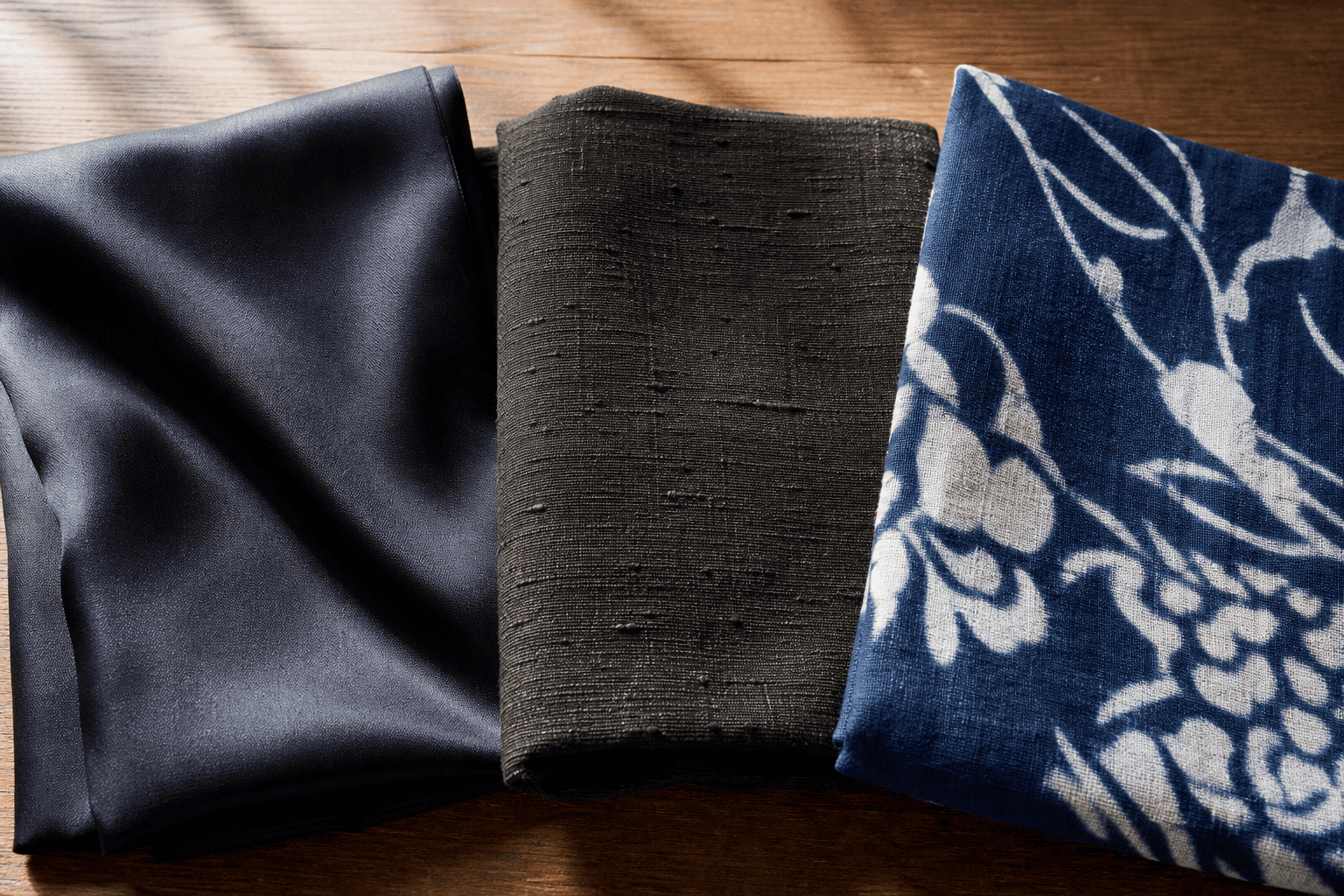
Silk made for kimono
Traditional kimono fabric is usually woven in narrow lengths. A kimono is constructed from straight panels, with minimal cutting compared with Western dressmaking. This means the fabric has a different logic: long, narrow pieces, motif placement, family crests and repeated woven or dyed patterns.
When remaking kimono silk into a dress, the maker must plan carefully around these widths, seams, motifs and any age-related marks. The design is shaped by the fabric, not imposed on it blindly.
Why vintage silk is special
Vintage kimono silk often has qualities that are difficult to reproduce in modern clothing: soft sheen, lightness, drape, depth of color and a quiet sense of formality. Even black silk can hold many tones, changing subtly with the light.
Because each kimono has a different history, no two remake dresses are exactly the same. The fabric may have been worn only a few times, preserved carefully, or kept in storage for decades.
Common types of kimono silk we use
Mourning kimono silk
Japanese black mourning kimono, often called kuromontsuki in formal contexts, can be made from beautiful black silk. Its deep color and restrained presence make it especially suited to simple A-line dresses, relaxed tunics and quiet formal pieces.
For international customers, black mourning silk can be powerful because it carries both cultural meaning and modern wearability. At jomon-aura, we do not erase its memory. We place it in a different light.
Tomesode and formal silk
Tomesode and other formal kimono may include elegant motifs, sometimes placed near the hem. These fabrics can become special occasion dresses or garments with carefully positioned design details.
Tsumugi silk
Tsumugi has a more textured, earthy feel. It may show slubs or unevenness in the thread, which gives it warmth and character. It is often suited to everyday dresses, tunics and pieces where texture matters as much as shine.
Visiting kimono and patterned silk
Some vintage kimono have soft colors, seasonal motifs or subtle metallic details. These can become graceful dresses when the pattern placement is handled carefully.
Vintage condition: what to expect
Vintage silk is not the same as new fabric from a bolt. It may include small signs of age, such as:
- faint storage creases
- tiny marks or discoloration
- slight weave irregularities
- subtle differences in tone
- areas that cannot be used because of weakness or damage
We inspect the fabric and avoid unsuitable areas as much as possible. Small signs of age are part of vintage fabric, but the finished garment should still be beautiful, wearable and respectful of the material.
Why one-of-a-kind really means one-of-a-kind
A vintage kimono is limited material. Once it is remade, the same fabric cannot simply be ordered again. Even if we make a similar dress shape, the exact silk, motif placement, tone and texture will differ.
This is why jomon-aura pieces are not mass-produced. They are small acts of transformation: one fabric, one design decision at a time.
Care for vintage silk
Silk should be treated gently. In most cases, dry cleaning or professional care is safer than home washing. Avoid soaking, strong friction, direct heat, harsh sunlight and damp storage.
When pressing is needed, use low heat and a press cloth. If you are unsure, ask before washing or ironing the garment.
How this affects custom orders
When you request a custom kimono remake dress, the fabric condition affects what is possible. Some silk is perfect for a long dress. Some is better for an A-line piece. Some may be better used as detail, lining, accessories or a shorter garment.
This is why the first step is always to look at photos and, when needed, inspect the fabric directly.
To understand the full process, see How to Order a Custom Kimono Remake Dress from Japan.
See examples
The best way to understand vintage kimono silk is to look closely at finished pieces: the fall of the hem, the sheen at the neckline, the quiet irregularity of the weave.
Interested in a dress made from vintage Japanese silk?
Browse finished pieces or request a custom order from jomon-aura in Nagasaki, Japan.